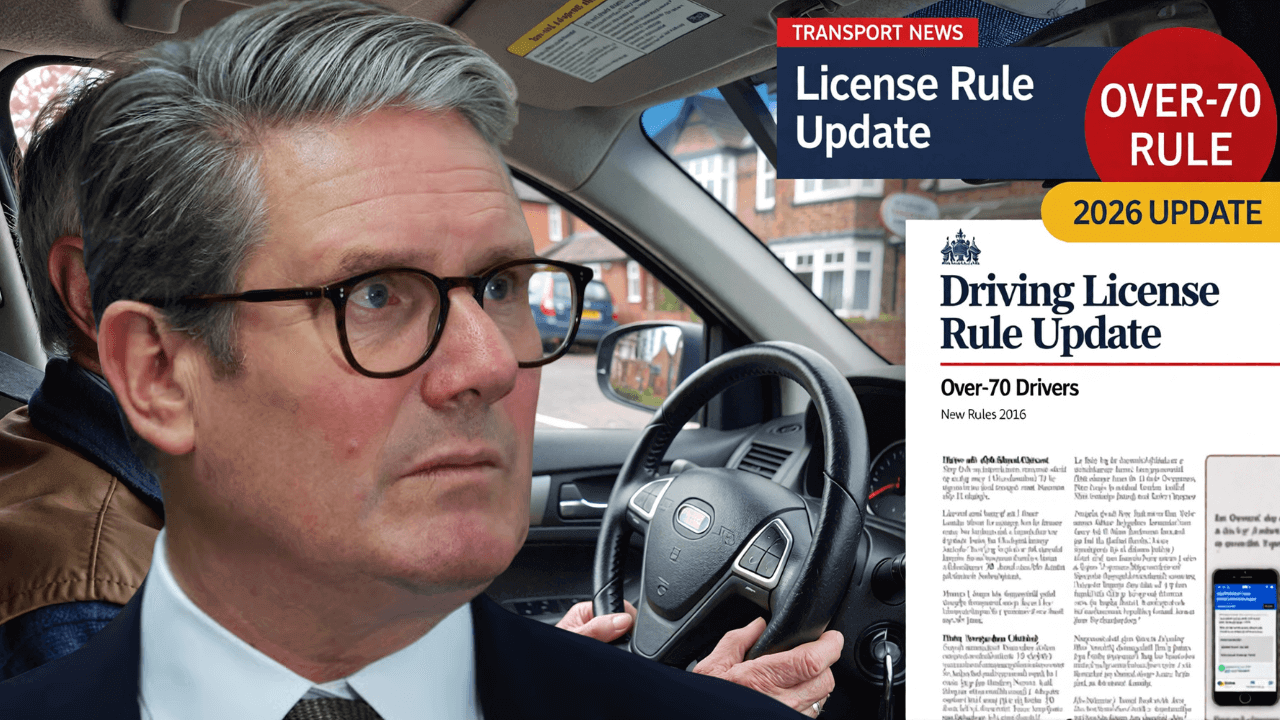
Driving provides independence, flexibility and freedom for millions of people across the United Kingdom. For older adults, being able to drive often means maintaining an active lifestyle, staying connected with family and continuing everyday routines such as shopping, medical appointments and social visits.
However, as drivers age, the law requires certain additional steps to ensure that everyone on the road remains safe. In the UK, drivers aged 70 and over must follow specific rules related to their driving licence. These rules are designed to ensure that older motorists are still able to drive safely while protecting other road users.
With discussions surrounding driving regulations continuing in 2026, many people have been asking about the rules that apply to drivers over 70. Understanding these requirements is important for older drivers and their families, particularly when it comes to renewing licences and maintaining road safety.
In the UK, driving licences and vehicle registrations are managed by the Driver and Vehicle Licensing Agency, often referred to as the DVLA. This organisation oversees driver records, licence renewals and vehicle compliance across the country.
Why special rules apply to drivers over 70
Age alone does not prevent someone from driving in the UK. Many people continue driving safely well into their seventies and eighties.
However, because health conditions can become more common with age, the law requires drivers over 70 to renew their driving licences more frequently than younger motorists.
The purpose of this system is not to restrict older drivers but to ensure that they remain medically fit to drive.
By renewing their licence regularly, older motorists confirm that they still meet the health and safety requirements needed to operate a vehicle safely.
Driving licence renewal at age 70
When a driver reaches the age of 70 in the UK, their standard driving licence expires.
At this point, they must renew their licence if they wish to continue driving legally.
The renewal process is usually straightforward and can be completed online, by post or sometimes through other approved methods.
During the renewal process, drivers are required to confirm that they are medically fit to drive.
This includes declaring any health conditions that may affect their ability to operate a vehicle safely.
Once approved, the renewed licence allows the individual to continue driving.
Renewal every three years
After turning 70, drivers must renew their licence every three years.
This regular renewal helps ensure that any changes in health or medical conditions are reported.
Unlike the initial licence application earlier in life, the renewal process for older drivers focuses mainly on confirming fitness to drive rather than retesting driving ability.
Most drivers over 70 continue driving without any issues once their licence has been renewed.
The system simply ensures that drivers remain aware of their responsibilities and health status.
Medical conditions and driving
Health plays an important role in determining whether someone is safe to drive.
Certain medical conditions may affect a person’s ability to control a vehicle or respond quickly to road situations.
For this reason, drivers must inform the DVLA if they develop medical conditions that could affect driving.
Examples may include vision problems, neurological conditions or illnesses that affect concentration or reaction times.
When a condition is reported, the DVLA may review medical information to determine whether the driver can continue driving safely.
In many cases, drivers are still able to keep their licence with certain conditions monitored by healthcare professionals.
Vision requirements for older drivers
Good eyesight is essential for safe driving.
Drivers must be able to read a number plate from a specified distance and clearly see road signs, pedestrians and other vehicles.
If eyesight changes with age, drivers may need updated glasses or contact lenses.
Regular eye tests are recommended to ensure that vision remains adequate for driving.
If corrective lenses are required, drivers must wear them while driving to comply with licence conditions.
The role of the Highway Code
All drivers in the UK are expected to follow the rules outlined in the Highway Code.
The Highway Code provides guidance on safe driving practices, road signs and legal responsibilities.
For older drivers, reviewing these rules occasionally can help ensure that they remain familiar with current regulations.
Road rules and driving environments can change over time, so staying updated is an important part of responsible driving.
When medical assessments may be required
In some cases, the DVLA may request additional information before renewing a licence.
This could involve medical reports from a doctor or specialist confirming that a driver is fit to continue driving.
The purpose of these assessments is to ensure safety rather than to automatically remove driving privileges.
Many drivers successfully complete medical assessments and continue driving without restrictions.
Each case is considered individually based on medical evidence and driving ability.
Support for older drivers
Various organisations across the UK offer guidance and support to help older drivers maintain confidence on the road.
Some groups provide refresher driving courses designed specifically for senior motorists.
These courses are not tests but opportunities to update driving knowledge and adapt to modern road conditions.
Refresher sessions may cover topics such as roundabout navigation, motorway driving and new road signage.
Participating in such programmes can help drivers feel more comfortable and confident behind the wheel.
The importance of independence for older adults
Driving plays a significant role in maintaining independence for many older adults.
Being able to travel without relying on others allows people to continue participating in social activities and community life.
For individuals living in rural areas, driving may be especially important because public transport options can be limited.
Maintaining mobility helps older adults remain active and connected, which can contribute positively to overall well‑being.
Because of this, policies surrounding elderly drivers aim to balance safety with independence.
Family discussions about driving
As people age, conversations about driving sometimes arise within families.
Family members may notice changes in confidence, reaction time or health that could affect driving ability.
Approaching these discussions with sensitivity is important because driving is closely linked to independence.
In many cases, simple adjustments such as avoiding driving at night or in heavy traffic can help older drivers continue safely.
Open communication between drivers, family members and healthcare professionals can help ensure that decisions are made responsibly.
Staying safe on the road at any age
Regardless of age, safe driving habits are essential.
Regular vehicle maintenance, awareness of road conditions and adherence to traffic laws all contribute to road safety.
Drivers should avoid distractions, stay alert and plan journeys carefully.
Taking regular breaks during longer trips can also help maintain concentration.
These habits benefit drivers of all ages and help reduce the risk of accidents.
Key points about driving licences for over‑70s
Drivers must renew their licence at age 70
Renewal is required every three years after that
Drivers must declare any medical conditions affecting driving
Good eyesight and general fitness are essential for safe driving
The DVLA manages licences and renewal procedures in the UK
Final thoughts
Driving after the age of 70 remains common in the United Kingdom, and many older motorists continue to drive safely for many years. The licence renewal system is designed not to limit independence but to ensure that drivers remain medically fit and aware of their responsibilities.
By renewing licences regularly, staying informed about road rules and maintaining good health, older drivers can continue enjoying the freedom that driving provides. For families and individuals alike, understanding the rules surrounding elderly driving licences helps ensure that journeys remain safe, responsible and enjoyable for everyone on the road.