Millions of pensioners across the United Kingdom rely on their State Pension as a primary source of income during retirement. As living costs continue to change, adjustments to pension payments remain an important part of the government’s financial support system.
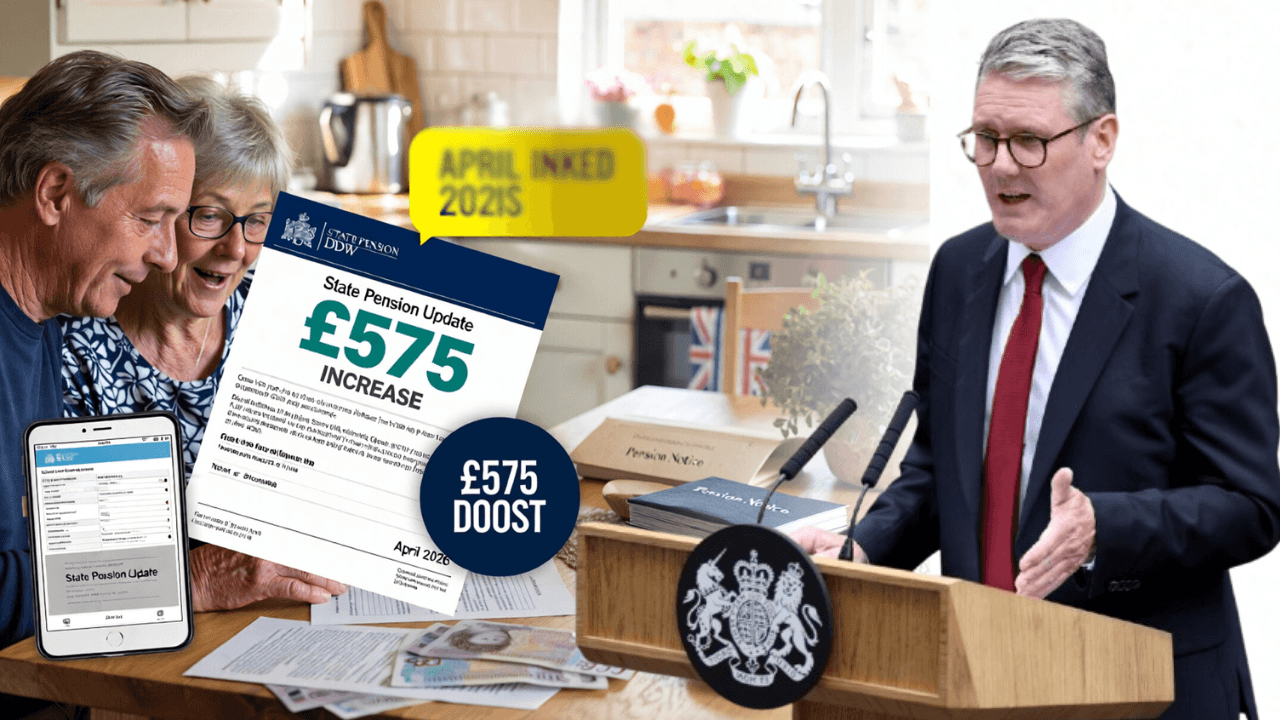
In recent updates, the Department for Work and Pensions (DWP) confirmed changes to pension payments that could see many retirees receiving higher annual support starting in April 2026. Reports suggest that the adjustment could result in a £575 yearly increase for some pensioners, depending on the type of pension they receive.
For older households managing rising expenses such as energy bills, groceries and healthcare costs, even a modest increase can make a noticeable difference to monthly budgets.
Understanding how the pension increase works, who may qualify and when the changes will take effect is important for anyone approaching retirement or currently receiving the State Pension.
Why the State Pension increases each year
The UK State Pension is reviewed regularly to ensure that payments keep pace with changes in the wider economy. These reviews consider factors such as inflation, wage growth and economic stability.
The aim is to protect pensioners from losing purchasing power over time. Without periodic increases, the value of pension income could gradually decline as the cost of living rises.
The government uses a policy known as the triple lock, which determines how the State Pension increases each year. This mechanism ensures that pension payments rise by the highest of three measures:
Inflation
Average earnings growth
A minimum increase of 2.5 percent
This system helps maintain the real value of pension income and provides greater financial security for retirees.
Understanding the State Pension system
The UK State Pension provides financial support to people who have reached retirement age and have made sufficient National Insurance contributions during their working lives.
The pension system is designed to reward long‑term contributions and ensure that people receive support in later life.
There are currently two main forms of the State Pension.
The first is the new State Pension, which applies to people who reached State Pension age on or after April 6, 2016.
The second is the basic State Pension, which applies to individuals who reached pension age before that date.
Although the structure of the two systems differs, both provide regular payments to eligible pensioners.
What the £575 increase represents
The reported £575 increase for April 2026 refers to the potential annual boost in pension income for certain recipients as a result of adjustments linked to the triple lock formula.
Rather than being a single lump‑sum payment, the increase would typically be spread across regular weekly pension payments.
For example, if the weekly State Pension rate rises, the total amount received over a year could increase by around £575 depending on the final rate adjustments.
For many pensioners, this increase can help offset rising everyday costs.
While it may not completely eliminate financial pressure, it can provide additional breathing room in monthly budgets.
Who may benefit from the increase
Most pensioners receiving the State Pension may see their payments increase when annual adjustments take effect.
Eligibility generally depends on meeting the requirements for receiving the State Pension in the first place.
This includes reaching State Pension age and having the necessary National Insurance contribution record.
Some pensioners may receive the full State Pension amount if they have a complete contribution history, while others may receive partial payments based on their contributions.
The increase typically applies proportionally, meaning those receiving higher pension amounts may see larger increases overall.
When the new pension rates take effect
Changes to State Pension payments usually take effect at the start of the new financial year in April.
Once the new rates are confirmed, pension payments are adjusted automatically.
Recipients do not need to apply for the increase, as the updated payment is added directly to their regular pension payments.
Pensioners will usually see the new payment amount reflected in their bank accounts shortly after the changes come into effect.
In many cases, official letters or notifications are sent to inform recipients about updated payment rates.
Why pension increases matter for retirees
For many retirees, the State Pension forms the foundation of their income during retirement.
Although some people also have workplace pensions or personal savings, a large number of pensioners rely heavily on the State Pension to cover everyday expenses.
Rising living costs can place pressure on these fixed incomes.
This is why regular pension increases are considered an important part of the UK’s social support system.
By adjusting payments in line with economic conditions, the government aims to ensure that pensioners maintain a reasonable standard of living.
Additional support available for pensioners
In addition to the State Pension, some retirees may qualify for additional forms of financial support.
One of the most important programmes is Pension Credit.
This benefit is designed to increase the income of pensioners who may be living on lower retirement incomes.
Pension Credit can also unlock access to other forms of assistance, including housing support, council tax reductions and cost‑of‑living payments.
Despite these benefits, many eligible pensioners do not claim Pension Credit.
Checking eligibility for this programme can therefore be an important step for retirees seeking additional financial support.
How pension increases affect household budgets
Although the State Pension increase may seem relatively modest compared with rising living costs, it can still have a meaningful impact on household finances.
An increase of several hundred pounds per year can help cover a variety of everyday expenses.
For example, the additional funds may help with energy bills during colder months, grocery shopping or transportation costs.
Over time, consistent pension increases also help maintain financial stability for retirees.
These adjustments ensure that pension income continues to provide reliable support even as the economy changes.
Checking your State Pension entitlement
Individuals approaching retirement age may wish to check their expected State Pension entitlement.
Understanding how much pension income you may receive can help with financial planning for retirement.
People can review their National Insurance contribution record and estimate future pension payments.
In some cases, individuals may have gaps in their contribution history.
Filling these gaps through voluntary contributions can sometimes increase future pension payments.
Taking time to review pension records can therefore be a valuable step for anyone planning for retirement.
Protecting yourself from pension scams
Whenever pension updates are announced, scammers sometimes attempt to take advantage of the situation.
Fraudulent messages may claim that individuals must provide personal details to receive pension increases or bonus payments.
These scams often appear as emails, text messages or phone calls pretending to come from government departments.
It is important to remember that legitimate pension increases are applied automatically.
Government agencies do not require pensioners to provide bank details or personal information through unsolicited messages.
Anyone who receives suspicious messages should verify the information through official channels before responding.
Staying informed about pension updates
Pension policies can change over time as governments respond to economic conditions and demographic trends.
For retirees and those approaching retirement age, staying informed about pension updates can help ensure they understand their entitlements.
Reading official government communications and checking reliable sources can provide accurate information about pension rates and eligibility rules.
Staying informed also helps individuals plan their finances more effectively during retirement.
Key points pensioners should remember
State Pension payments are reviewed annually
The triple lock helps protect pension income from inflation
The reported £575 increase reflects yearly adjustments to payment rates
Most pension increases are applied automatically
Additional support may be available through Pension Credit
Final thoughts
The confirmation of a State Pension increase expected in April 2026 reflects the UK government’s continued efforts to support retirees as living costs evolve. For many pensioners, the additional income could provide welcome relief during a period of economic uncertainty.
While the increase may not fully offset rising expenses, it demonstrates the ongoing commitment to maintaining the value of pension income. By staying informed about pension updates and reviewing available benefits, retirees can ensure they receive the financial support designed to help them maintain stability and independence throughout retirement.