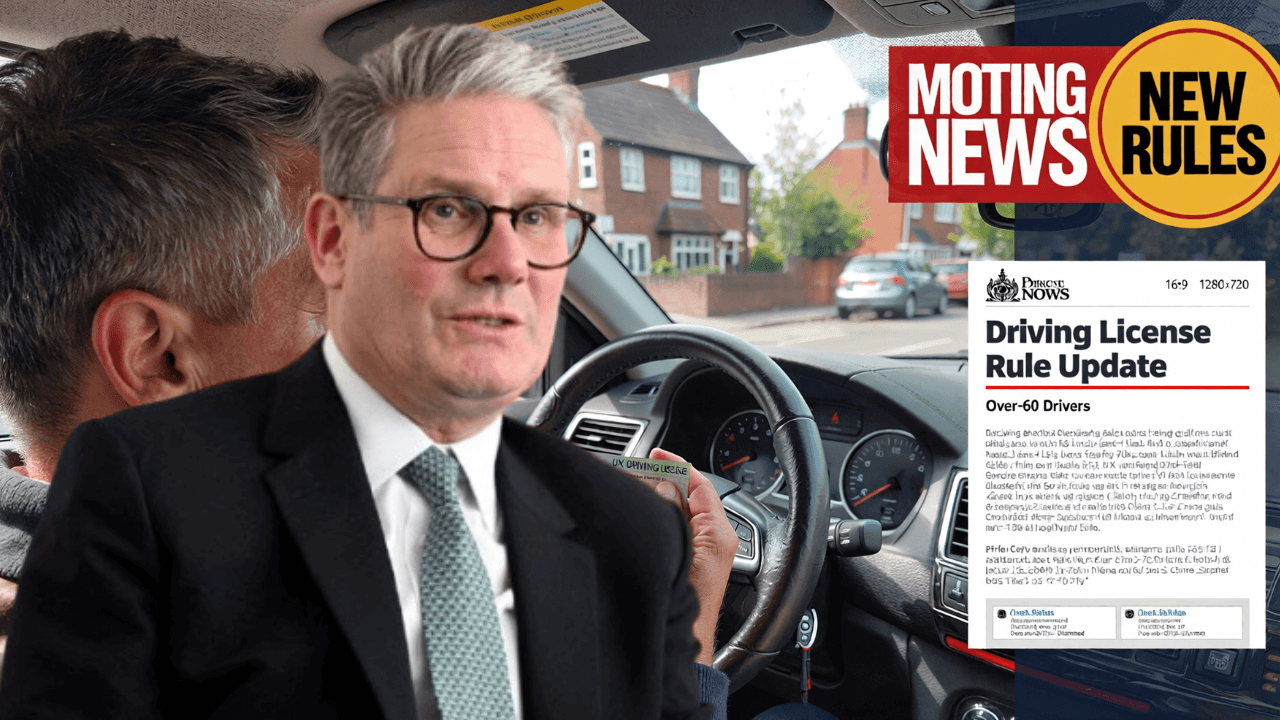
Recent headlines circulating online have raised concerns among many motorists in the United Kingdom, especially older drivers. Some reports suggest that a driving licence ban for people over the age of 60 could be introduced under new rules expected in 2026. Such claims have naturally sparked confusion and concern among drivers who rely on their vehicles for everyday independence.
For millions of people across the country, driving is an essential part of daily life. It enables them to travel to work, visit family members, attend medical appointments and maintain social connections. Because of this, any suggestion that drivers might lose their licences based solely on age has attracted significant public attention.
In reality, driving regulations in the UK are managed carefully by the Driver and Vehicle Licensing Agency, and the system is designed to prioritise safety rather than impose restrictions purely based on age. Understanding how the rules actually work can help older drivers avoid unnecessary worry and remain informed about their responsibilities.
Understanding the claims about a driving ban
The idea that drivers over the age of 60 could automatically lose their licences has spread widely online. However, the UK’s licensing system does not impose an automatic ban on drivers simply because they reach a certain age.
Instead, regulations focus on whether a driver is fit to drive safely. Many people remain capable and responsible drivers well into their seventies and eighties.
In fact, the law recognises that age alone is not an accurate indicator of driving ability. As a result, UK rules are structured around health, safety and driver competence rather than strict age‑based restrictions.
How driving licences work in the UK
A standard driving licence in the UK usually remains valid until a driver reaches the age of 70. During this time, drivers generally do not need to renew their licence unless their personal details change or there are administrative reasons to update the document.
Drivers aged over 60 therefore continue to hold the same rights as other motorists.
There is no automatic licence review, test or ban triggered by turning 60.
This means that drivers in their sixties can continue driving normally as long as they meet the standard requirements for safe driving.
What actually changes at age 70
The most important age milestone for drivers in the UK is 70, not 60.
When a driver reaches 70 years old, they must renew their driving licence if they wish to continue driving legally.
The renewal process is typically straightforward and can be completed online or by post.
Drivers must confirm that they are medically fit to drive and meet the required health standards.
Unlike some rumours suggest, drivers usually do not need to retake a driving test during this renewal process.
Instead, they simply declare that they are fit to drive.
After age 70, licences must be renewed every three years.
Why health checks are important for drivers
Driving safely requires good vision, concentration and physical coordination. As people grow older, certain health conditions may affect these abilities.
Because of this, UK law requires drivers to inform the licensing authority if they develop medical conditions that could affect driving.
Examples of conditions that may need to be reported include certain neurological disorders, severe vision problems or illnesses that could cause sudden loss of consciousness.
These rules apply to drivers of all ages, not just older motorists.
The purpose of reporting medical conditions is to ensure that drivers remain safe on the road.
Vision requirements for safe driving
One of the most important requirements for driving is having adequate eyesight.
UK law requires drivers to be able to read a standard vehicle number plate from a specific distance.
If a driver needs glasses or contact lenses to meet this requirement, they must wear them while driving.
Regular eye tests are therefore strongly recommended, especially for older drivers.
Changes in vision can occur gradually over time, and routine checks help ensure that drivers maintain the necessary level of visual clarity for safe driving.
Why older drivers are often among the safest
Despite concerns about age and driving ability, studies frequently show that older drivers tend to adopt safer driving habits.
Many experienced drivers are more cautious on the road and avoid situations that may increase risk.
For example, some older motorists choose not to drive at night or during severe weather conditions.
They may also prefer quieter routes and avoid busy traffic periods.
These habits can contribute to safer driving behaviour.
Decades of driving experience also help older drivers anticipate potential hazards more effectively.
Technology supporting older drivers
Modern vehicles include many safety features that can help drivers maintain control and awareness on the road.
Technologies such as parking sensors, reversing cameras and automatic emergency braking are becoming increasingly common.
These features can be particularly useful for older drivers.
Advanced driver assistance systems also include lane‑keeping alerts and blind‑spot monitoring.
These technologies help drivers stay aware of their surroundings and reduce the risk of accidents.
As automotive technology continues to improve, it is likely that these features will help drivers remain safe for longer.
When driving assessments may be required
In certain situations, the licensing authority or a healthcare professional may recommend a driving assessment.
This does not automatically mean that a driver will lose their licence.
Instead, the purpose of the assessment is to evaluate whether the individual can continue driving safely.
Driving assessments are conducted by trained professionals who understand how health conditions may affect driving ability.
Many drivers complete these assessments successfully and continue driving without restrictions.
Maintaining independence through safe driving
For many older people, driving plays a key role in maintaining independence and mobility.
Being able to drive allows individuals to stay connected with their communities, manage everyday tasks and remain socially active.
Maintaining safe driving habits is essential for preserving this independence.
Regular health check‑ups, staying active and keeping eyesight tested can all help drivers remain confident behind the wheel.
Refresher driving courses are also available for people who want to update their skills or learn about modern road systems.
Avoiding misinformation about driving rules
In the digital age, headlines and social media posts can sometimes spread misleading information about government rules.
Claims about automatic driving bans for certain age groups can cause unnecessary concern.
The UK licensing system focuses on safety and driver fitness rather than age restrictions.
Checking official guidance from the licensing authority is the best way to confirm whether any new rules apply.
Reliable information helps drivers understand their rights and responsibilities clearly.
Key points drivers should remember
Drivers can usually keep their licence until age 70 without renewal
There is no automatic driving ban at age 60
Licences must be renewed every three years after age 70
Drivers must report medical conditions that affect driving ability
Regular eye tests help maintain safe driving
Final thoughts
The suggestion that the UK government has introduced a driving licence ban for people over 60 has caused confusion among many motorists. In reality, the UK’s licensing system does not impose automatic restrictions based solely on age.
Instead, the focus remains on ensuring that drivers are medically fit and capable of operating a vehicle safely. Millions of people continue driving confidently well into later life, and the rules managed by the Driver and Vehicle Licensing Agency are designed to support both road safety and personal independence.
For drivers over 60, the most important step is simply staying informed, maintaining good health and continuing to practise responsible driving habits. By doing so, older motorists can remain safe, confident and independent on the road for many years to come.