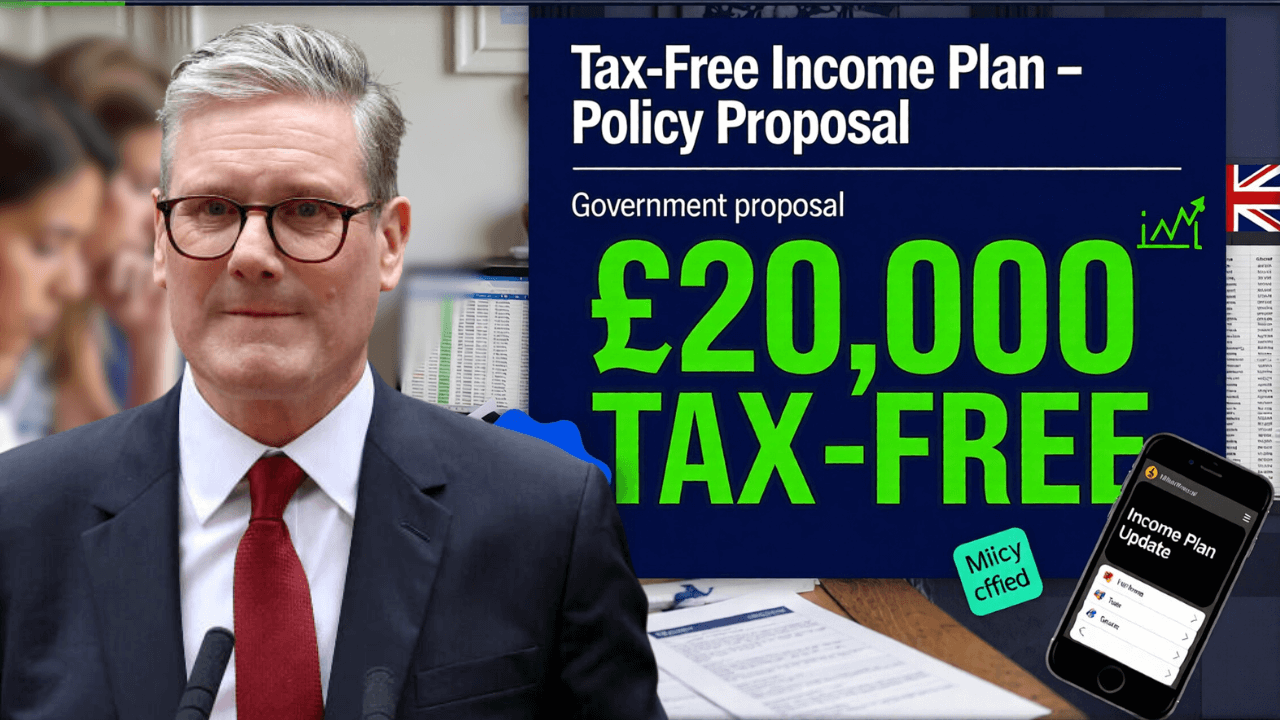
Talk of a potential £20,000 tax‑free income threshold has sparked widespread interest across the UK. For working households, retirees and savers alike, the idea of keeping more of what you earn is naturally appealing.
As discussions around tax thresholds continue, many people are asking: what would a £20,000 tax‑free income plan actually mean? Who could benefit? And is it a confirmed policy or still under consideration?
Here is a clear and practical guide to understanding what this proposal involves, how it could affect different groups, and what it might mean for your finances.
What Is the Current Tax‑Free Allowance
At present, most UK taxpayers are entitled to a Personal Allowance. This is the amount of income you can earn each tax year before paying income tax.
The standard Personal Allowance currently stands at £12,570.
If your total taxable income stays below that threshold, you do not usually pay income tax. Once your income exceeds that figure, the portion above it is taxed at the relevant rate.
A proposed increase to £20,000 would represent a significant change to the system.
What a £20,000 Threshold Would Mean
If the tax‑free threshold were raised to £20,000, individuals could earn up to that amount each year without paying income tax.
For someone currently earning £20,000 annually, that could mean paying no income tax at all under the new threshold.
For higher earners, it would reduce the portion of income subject to tax.
In simple terms, more income would remain in people’s pockets rather than being paid to the Treasury.
Who Could Benefit Most
A higher tax‑free allowance would primarily benefit:
Low‑income workers
Part‑time employees
Pensioners with modest retirement income
Self‑employed individuals with lower profits
For example, someone earning £18,500 a year currently pays income tax on the portion above £12,570. If the threshold were lifted to £20,000, that same person might pay no income tax at all.
That could translate into hundreds or even thousands of pounds saved per year.
What About Pensioners
The State Pension counts as taxable income.
Many pensioners rely on a combination of the State Pension and private pensions. If their total income exceeds £12,570, tax may apply.
Under a £20,000 tax‑free income plan, many retirees with modest additional income could avoid paying income tax entirely.
This would particularly benefit those who have small workplace pensions alongside their State Pension.
Impact on Working Households
For working families, the effect could be substantial.
Take someone earning £25,000 annually. Currently, tax applies to income above £12,570. If the threshold rose to £20,000, tax would apply only to £5,000 rather than £12,430.
That could reduce their annual tax bill significantly.
Such a move would be especially meaningful during a period of high living costs, helping households manage bills and essentials.
How Income Tax Is Currently Structured
Income tax in the UK is administered by HM Revenue and Customs.
Once income exceeds the Personal Allowance, the basic rate of 20 percent applies up to the higher rate threshold.
Raising the tax‑free allowance would not change tax rates themselves — but it would change how much income is subject to those rates.
Is the £20,000 Plan Confirmed
At the time of discussion, the £20,000 tax‑free income figure is part of political debate and fiscal policy proposals rather than a fully enacted law.
Tax thresholds are ultimately set by the government and confirmed through official Budget announcements.
Until formal legislation is introduced, any increase remains a proposal.
That said, the scale of the figure has attracted attention because of how transformative it could be.
The Cost to Public Finances
Any increase in the tax‑free allowance would reduce the amount of income tax collected.
This would have implications for government spending and public finances.
Supporters argue that allowing people to keep more of their earnings stimulates spending and economic growth.
Critics raise concerns about funding public services if tax revenue falls.
As with most tax policy changes, there is a balance between supporting households and maintaining fiscal stability.
Interaction With Other Allowances
It is important to remember that income tax is only one part of the system.
National Insurance contributions, for example, are calculated separately.
Even if the income tax threshold rose to £20,000, National Insurance rules might still apply depending on earnings levels.
Similarly, savings allowances and dividend allowances operate under separate frameworks.
Understanding the broader tax picture is essential.
Could It Reduce Fiscal Drag
In recent years, tax thresholds have remained frozen while wages have risen.
This phenomenon, often called fiscal drag, means more people are pulled into paying tax even if their real purchasing power has not increased significantly.
Raising the Personal Allowance to £20,000 could counteract that effect for many lower‑ and middle‑income earners.
It would provide breathing room as wages gradually rise.
How It Might Affect Small Businesses
Self‑employed individuals and small business owners often have fluctuating incomes.
A higher tax‑free threshold could reduce the burden during slower trading years.
It may also encourage entrepreneurship by lowering the effective tax bill on modest profits.
For freelancers and sole traders earning below £20,000 annually, it could mean no income tax liability.
What Households Should Do Now
Because the £20,000 figure is not yet confirmed policy, there is no immediate action required.
However, it is wise to:
Review your annual income
Check your current tax code
Understand how much tax you currently pay
Stay informed about Budget announcements
If changes are introduced, they would usually apply from the start of a new tax year.
Real‑World Example
Let’s consider two scenarios.
Scenario one:
An individual earns £19,500 annually.
Under current rules, income above £12,570 is taxed.
Under a £20,000 threshold, no income tax would apply.
Scenario two:
An individual earns £30,000 annually.
Currently, tax applies to income above £12,570.
If the threshold rose to £20,000, tax would apply only to income above £20,000 — reducing their annual bill.
These examples illustrate how the change could benefit millions.
Why the Figure Has Gained Attention
The £20,000 number is psychologically significant.
It is a round, easily understood figure that aligns with many part‑time or entry‑level salaries.
For pensioners with modest combined income, it also represents a level at which many would feel financially secure without tax pressure.
That clarity is part of why the proposal resonates.
Potential Timeline
Major tax changes are typically announced in the Autumn Budget or Spring Statement.
If adopted, changes would normally take effect from 6 April at the start of a new tax year.
Until official confirmation is made, it remains a policy discussion rather than enacted law.
Key Points to Remember
The current Personal Allowance is £12,570.
A £20,000 tax‑free threshold would represent a significant increase.
Pensioners and low‑income workers would benefit most.
The proposal is part of ongoing policy discussions.
Official confirmation would come through a formal Budget announcement.
Final Thoughts
The idea of a £20,000 tax‑free income threshold understandably captures attention. For millions of working people and pensioners, it could mean paying less tax and keeping more of their earnings.
However, until formally introduced through legislation, it remains a proposal rather than confirmed policy.
For now, the best approach is to stay informed, understand your current tax position and watch for official announcements from the government.
If implemented, such a change would represent one of the most significant adjustments to the income tax system in recent years — with wide‑ranging implications for households across the UK.